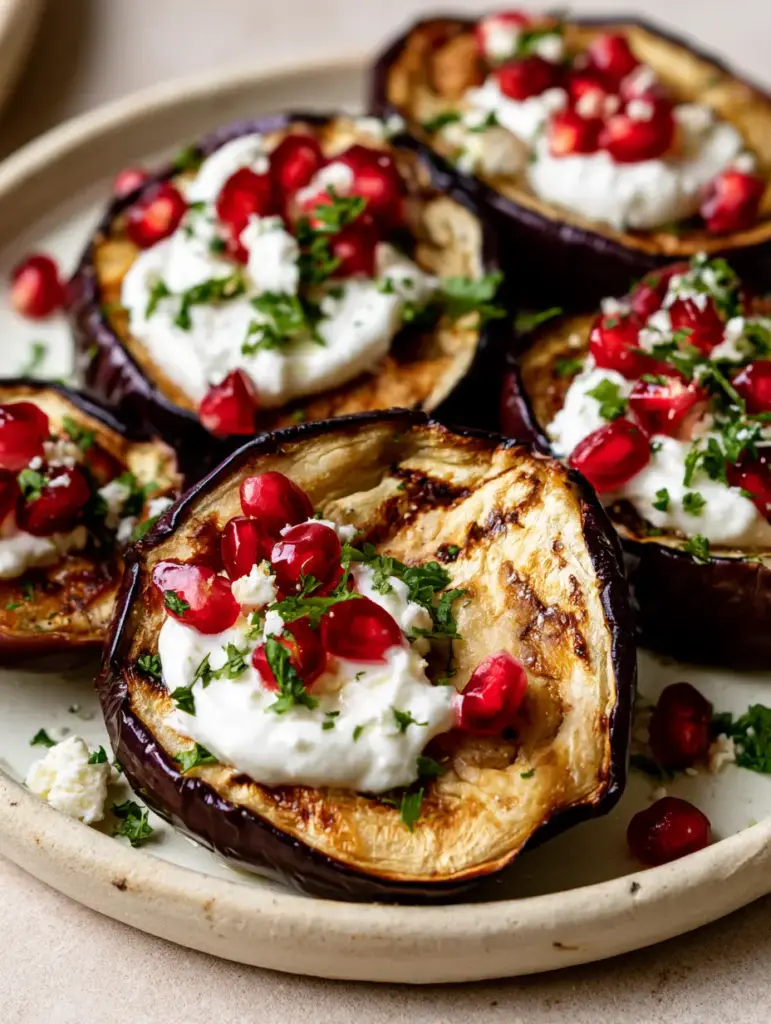
Greek Roasted Eggplant is the Mediterranean side dish you didn’t know your dinner table was missing. Imagine thick-cut rounds of eggplant, roasted until the centers are buttery-soft and the edges have that perfect smoky char. Now, picture them topped with a cool, creamy white yogurt sauce, salty feta crumbles, and the bright pop of fresh red pomegranate seeds. It is a visual masterpiece that tastes even better than it looks.
This recipe is designed for those who crave vibrant flavors and effortless elegance. Whether you are looking for a healthy lunch or a show-stopping side for a dinner party, these roasted rounds deliver. The combination of warm, earthy eggplant and chilled, tangy yogurt creates a temperature contrast that is purely addictive. Plus, the deep purple skin against the stark white sauce and ruby-red seeds makes every plate look like a professional food photograph.
Why You Will Love This Vibrant Mediterranean Dish
- Textural Perfection: You get the contrast of tender, golden-brown flesh against charred edges and crunchy pomegranate seeds.
- Visual Appeal: The deep purple skin and bright green parsley make this dish a “saveable” Pinterest favorite that pops on any feed.
- Healthy & Nutrient Dense: Packed with fiber, healthy fats from extra virgin olive oil, and probiotics from the yogurt.
- Versatile Pairing: It works beautifully alongside a luxurious crab pasta or as a light companion to grilled meats.
The Essential Ingredients for Greek Roasted Eggplant Success
Creating the perfect Greek Roasted Eggplant starts with selecting high-quality produce. Since eggplant acts like a sponge, the quality of your oil and seasonings will define the final flavor profile. Here is what you need to gather for your kitchen counter.
Large Globe Eggplants: Look for firm eggplants with shiny, deep purple skin. You want them to feel heavy for their size, which indicates freshness. Thick-cut rounds ensure the eggplant holds its shape during the high-heat roasting process.
Extra Virgin Olive Oil: Use a high-quality oil here. It provides the necessary fat for searing and helps achieve those golden-brown flesh tones we are aiming for. You will need about 1/4 cup (60ml) for the roasting process.
Dried Mediterranean Herbs: A blend of dried oregano and thyme adds an earthy baseline to the vegetable. We season before roasting to allow the heat to bloom the oils in the herbs.
Greek Yogurt: Use a full-fat, thick Greek yogurt for the creamy white sauce. It needs to be sturdy enough to hold its shape when dolloped onto the warm eggplant rounds without immediately melting away.
Fresh Pomegranate Seeds: These provide the “jewels” of the dish. They add a necessary burst of acidity and a sweet-tart crunch that balances the richness of the feta and yogurt.
White Feta Cheese: Opt for a block of feta in brine and crumble it yourself. The small crumbles of white feta cheese add a salty, tangy punch that elevates the entire flavor profile.
Fresh Parsley: Finely chopped fresh green parsley provides the final aromatic touch and a beautiful color contrast against the white sauce.
Step-by-Step Guide to Achieving Perfectly Charred Eggplant
The secret to Greek Roasted Eggplant that isn’t soggy lies in the temperature and the preparation. Follow these steps to ensure your eggplant is tender, not greasy, with beautiful light char marks.
Preparing the Eggplant Rounds
Start by washing your eggplants and drying them thoroughly. Slice them into 1-inch (2.5cm) thick rounds. Keeping the thickness consistent is vital for even cooking. Do not peel the eggplant; the deep purple skin provides structural integrity and contains most of the antioxidants.
Arrange the rounds on a large baking sheet. To prevent the eggplant from becoming bitter, you can sprinkle them lightly with salt and let them sit for 15 minutes, then pat dry with a paper towel. This draws out excess moisture, ensuring a better sear in the oven.
The Roasting Process for Maximum Flavor
Preheat your oven to 425°F (220°C). Brush both sides of each eggplant round generously with extra virgin olive oil. Season with sea salt, cracked black pepper, and your dried herbs. The high heat is what creates the tender, golden-brown flesh and those coveted charred edges.
Place the tray in the center of the oven. Roast for 20-25 minutes, flipping halfway through. You are looking for the flesh to become translucent and soft, while the edges begin to darken and crisp up. If you want more intense char marks, you can turn on the broiler for the last 2 minutes of cooking, but watch it closely!
Whisking the Creamy White Yogurt Sauce
While the eggplant roasts, prepare your topping. In a small bowl, combine 1 cup (240ml) of thick Greek yogurt with a splash of lemon juice and a grated clove of garlic. Whisk until smooth. This sauce should be thick enough to be described as a generous dollop rather than a thin drizzle. Keep it chilled until the moment of serving.
The Art of Plating and Garnishing
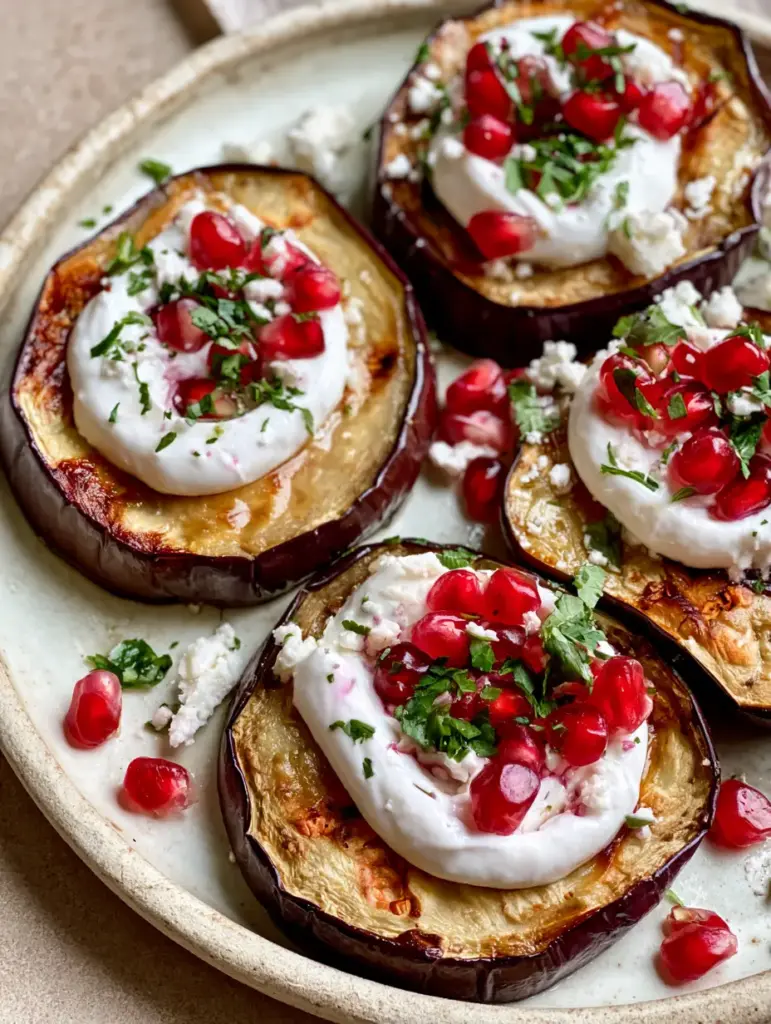
Once the eggplant is out of the oven, let it cool for just 2-3 minutes. Arrange the slices on a rustic off-white ceramic plate. This neutral background allows the colors of the food to shine. Use a spoon to place a generous dollop of thick white creamy sauce directly in the center of each round.
Sprinkle the small crumbles of white feta cheese over the top. Follow this with a handful of bright red pomegranate seeds and a dusting of finely chopped fresh green parsley. The result should look exactly like a handheld smartphone photo from a high-end Mediterranean bistro.
Expert Tips for Success
- Don’t Overcrowd the Pan: If the eggplant rounds are touching, they will steam instead of roast. Use two pans if necessary to ensure those charred edges develop properly.
- Use High Heat: Eggplant needs a hot oven (425°F/220°C) to break down the cellular structure and become creamy. Low heat will result in a rubbery texture.
- Salt the Yogurt: Don’t forget to add a pinch of salt to your yogurt sauce. It helps bridge the gap between the sweet pomegranate and the savory eggplant.
- Internal Flavor Boosting: If you are serving this as a main, consider pairing it with a perfectly marinated pork chop for a complete Mediterranean feast.
Storage, Reheating, and Freezing
Storage: Greek Roasted Eggplant is best enjoyed fresh. However, you can store leftover roasted rounds in an airtight container in the refrigerator for up to 3 days. Store the yogurt sauce separately to prevent the eggplant from getting soggy.
Reheating: To maintain the texture, reheat the eggplant rounds in a 350°F (175°C) oven or air fryer for 5 minutes until warmed through. Do not microwave if you want to keep the edges crisp. Top with fresh yogurt sauce after reheating.
Freezing: We do not recommend freezing this dish. The high moisture content of the eggplant and the delicate nature of the yogurt sauce will result in a mushy texture upon thawing.
What to Serve With This Dish
This Greek Roasted Eggplant is incredibly versatile. For a vegetarian lunch, serve it with a side of warm pita bread and hummus. For a hearty dinner, it acts as a refreshing counterpoint to rich dishes like classic lasagna or a savory short rib recipe.
If you are looking for a light summer meal, pair these rounds with a crisp glass of white wine and a simple cucumber salad. The creamy feta and yogurt also make it a great companion to spicy grilled chicken or lamb skewers.
Frequently Asked Questions
Greek yogurt is preferred because it is thicker. Regular yogurt may be too runny and slide off the warm eggplant rounds.
While modern eggplants are less bitter, salting helps draw out moisture. This ensures your Greek Roasted Eggplant gets those perfect charred edges instead of steaming.
Yes! The skin of the eggplant becomes tender when roasted at high heat and provides a beautiful color contrast and extra nutrients.
If pomegranates aren’t in season, try using dried cranberries or a drizzle of balsamic glaze for a similar sweet-tart balance.
The Ultimate Greek Roasted Eggplant Recipe
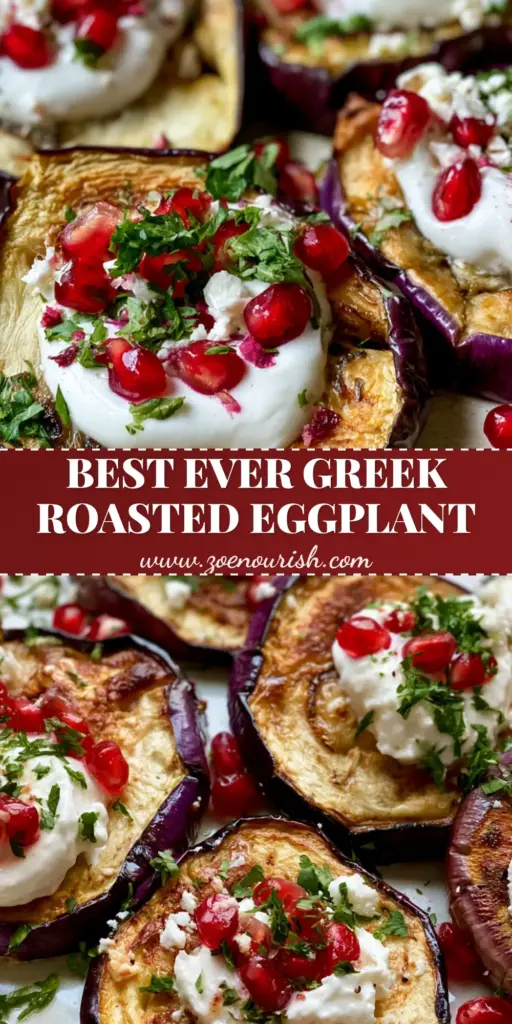
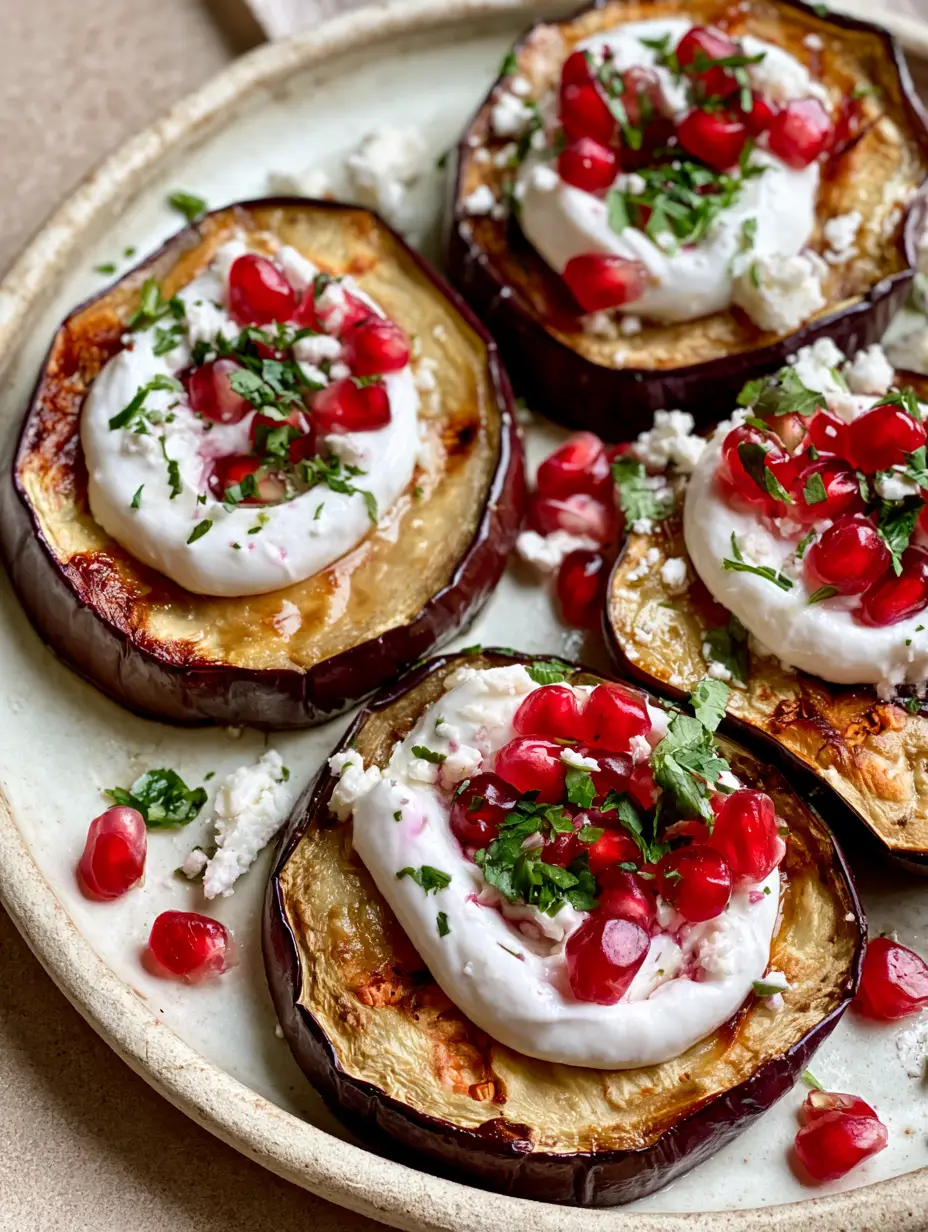
Greek Roasted Eggplant with Creamy Yogurt and Pomegranate
Ingredients
Equipment
Method
- Slice eggplant into 1-inch (2.5cm) rounds. Optionally salt for 15 minutes and pat dry.
- Arrange rounds on a baking sheet. Brush with olive oil and sprinkle with dried herbs, salt, and pepper.
- Roast at 425°F (220°C) for 20-25 minutes, flipping halfway, until golden-brown with charred edges.
- Top each round with a dollop of yogurt sauce, feta crumbles, pomegranate seeds, and fresh parsley.
Notes
Use thick Greek yogurt so the topping doesn't run.
Save This Recipe to Pinterest!
Do you love this Greek Roasted Eggplant? Make sure to save it to your Mediterranean Recipes board on Pinterest so you can find it later! If you make this dish, we would love to see your results. Follow zoe_nourish for more healthy, visual recipe inspiration.
Don’t forget to leave a 5-star rating in the recipe card above if you enjoyed it, and share a photo of your plate in the comments below. Happy roasting!