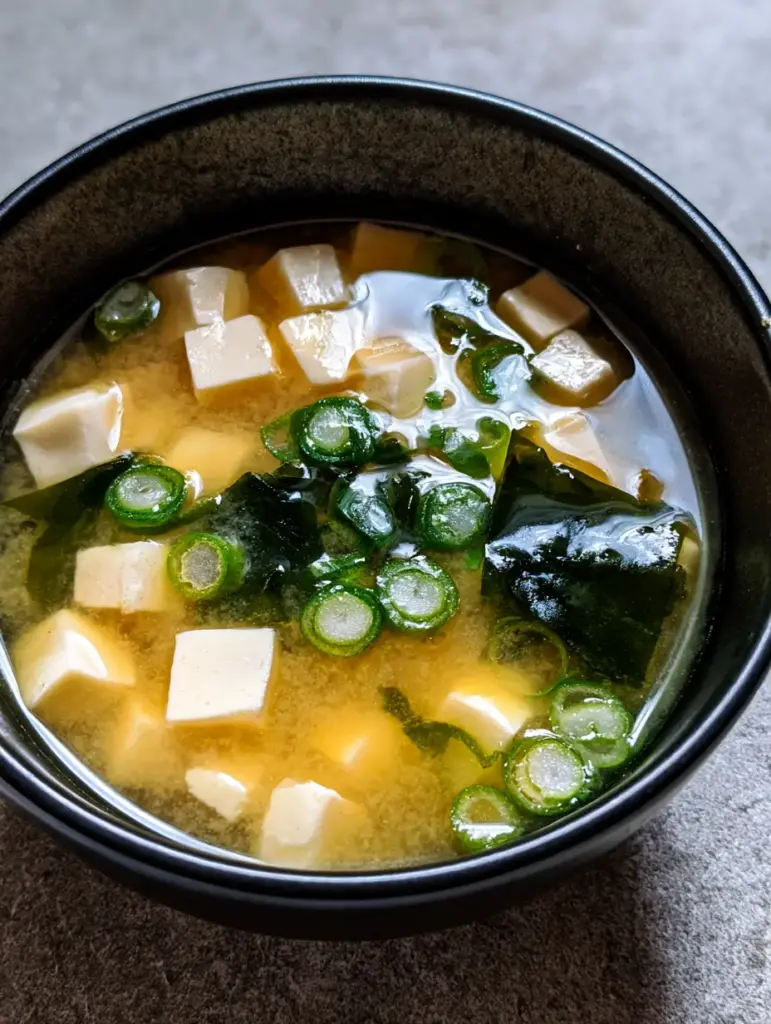
This Easy Miso Soup Recipe is more than just a side dish; it is a warm, savory embrace in a bowl. When you see that signature cloudy miso broth swirling against a matte black ceramic bowl, you know you are in for an authentic experience. Whether you are looking for a quick lunch or a starter for your homemade ramen recipe, this guide ensures a perfect result every time.
Many people think making restaurant-quality miso soup at home is difficult, but it actually takes less than 15 minutes. The key lies in the visible miso paste suspension and the delicate handling of the soft white silken tofu. By following these steps, you will achieve the perfect balance of umami and saltiness that defines a true Easy Miso Soup Recipe.
Why This Easy Miso Soup Recipe Is Your New Go-To
- Perfect Texture: Featuring uniform cubed soft white silken tofu that melts in your mouth.
- Visual Appeal: The contrast of dark green wakame seaweed against the yellowish-brown broth is stunning.
- Pro-Level Broth: We use specific techniques to ensure a cloudy yellowish-brown broth with no clumps.
- Fresh Finish: A scattering of freshly sliced green onions provides a vibrant green ring and a sharp, clean bite.
If you enjoy light yet flavorful soups, you might also love our creamy seafood bisque for a more indulgent evening meal. However, for a daily dose of probiotics and warmth, nothing beats the simplicity of this miso soup.
The Essential Components for Authentic Miso Soup
To master the Easy Miso Soup Recipe, you must understand the four pillars of the dish: the dashi, the miso, the tofu, and the seaweed. Each plays a critical role in the final flavor profile and the visual “cloud” effect.
1. The Dashi (The Foundation)
Dashi is the backbone of Japanese cuisine. For this Easy Miso Soup Recipe, you can use instant dashi granules for speed or simmer kombu (dried kelp) and katsuobushi (bonito flakes) for a deeper flavor. The dashi provides the savory liquid base that allows the cloudy miso broth to shine.
2. Miso Paste (The Heart)
The visible miso paste suspension you see in high-end Japanese restaurants comes from high-quality fermented soybean paste. We recommend Shiro (white) miso or Awase (a blend) for this recipe. It creates that beautiful yellowish-brown hue mentioned in our visual blueprint.
3. Silken Tofu (The Silkiness)
Unlike firm tofu used in stir-frys, cubed soft white silken tofu is essential here. It has a custard-like consistency that perfectly complements the liquid broth. Be gentle when stirring to keep those numerous small, uniform cubes intact.
4. Wakame & Green Onions (The Accents)
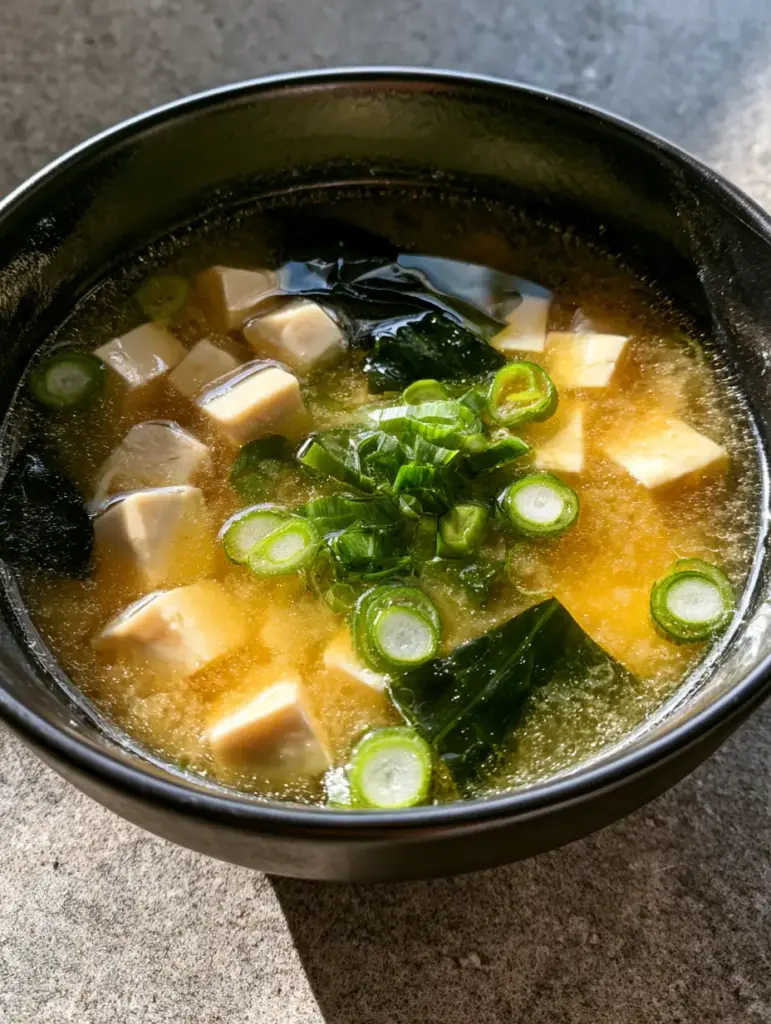
The rehydrated dark green wakame seaweed adds a hint of the ocean, while freshly sliced green onions offer the necessary color contrast. Look for the white centers and vibrant green rings when slicing your aromatics.
How to Craft the Perfect Easy Miso Soup Recipe
Making this soup is a lesson in timing. You never want to boil the miso paste, as high heat destroys its delicate probiotic benefits and alters the flavor profile. Follow these steps to maintain the cloudy yellowish-brown broth.
Preparing the Wakame and Tofu
Start by placing 1 tbsp (approx. 5g) of dried wakame in a small bowl of water. It will rehydrate into dark green wakame seaweed in about 5 minutes. Meanwhile, carefully slice your soft white silken tofu into 1/2-inch (1.25cm) cubes.
Simmering the Dashi Base
In a medium saucepan, bring 4 cups (960ml) of water to a gentle simmer. Whisk in 2 tsp (10g) of dashi granules until fully dissolved. You should have a clear, golden liquid that smells slightly smoky and savory.
The “Miso Sieve” Technique
This is the secret to the Easy Miso Soup Recipe. Place 3-4 tbsp (50-65g) of miso paste into a fine-mesh sieve. Submerge the bottom of the sieve into the hot dashi and use a spoon to press the miso through. This prevents clumps and creates the visible miso paste suspension.
Adding the Finishing Touches
Once the miso is integrated, add the cubed soft white silken tofu and the rehydrated dark green wakame seaweed. Let them sit in the hot liquid for 1-2 minutes until warmed through. Do not let the soup reach a rolling boil!
Expert Tips for Success
- Temperature Control: Always turn the heat to low before adding the miso paste. Boiling miso makes it grainy and kills the “cloudy” aesthetic.
- Freshness Counts: Only slice your freshly sliced green onions right before serving to maintain their crispness and “vibrant green rings.”
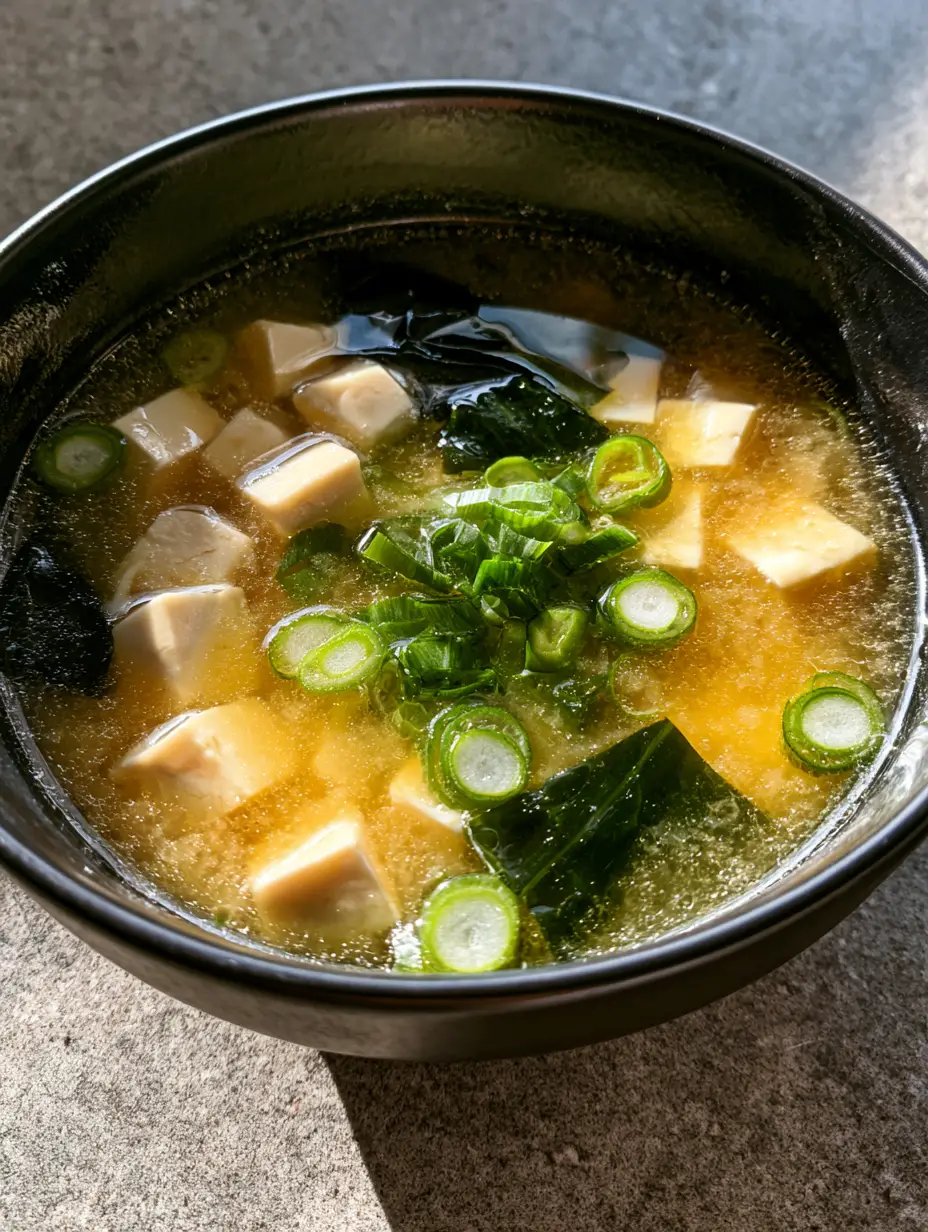
- Bowl Choice: Serving this in a matte black ceramic bowl isn’t just for looks; the dark background makes the cloudy yellowish-brown broth pop visually.
- Customization: If you want a heartier meal, serve this alongside our roasted eggplant for a full vegetarian feast.
Storage, Reheating & Freezing
Miso soup is best enjoyed immediately. However, if you have leftovers of this Easy Miso Soup Recipe, store them in an airtight container in the fridge for up to 2 days.
Reheating: Warm the soup in a small pot over low heat. Stop as soon as it begins to steam. Never microwave on high power, as it will toughen the soft white silken tofu.
Freezing: We do not recommend freezing this soup. The cubed soft white silken tofu will change texture significantly, becoming spongy and unpleasant once thawed.
What to Serve With This Easy Miso Soup Recipe
This soup is a versatile companion. It pairs beautifully with steamed rice, pickled vegetables, or a protein-heavy main dish. For a fusion twist, try it as a starter before serving stuffed chicken or even a light crab pasta.
Frequently Asked Questions
No, you should never boil miso soup once the miso paste has been added. Boiling destroys the delicate probiotics, changes the flavor to be more bitter, and ruins the cloudy visual suspension.
While you can, silken tofu is highly recommended for its delicate, custard-like texture which is traditional for miso soup. Firm tofu will not provide the same melting mouthfeel.
The cloudy look comes from the miso paste suspension. Use a fine-mesh sieve to melt the paste into the dashi and avoid high heat, which causes the paste to settle too quickly.
It depends on the dashi. Traditional dashi uses bonito flakes (fish). To make it vegetarian, use a kombu-only (kelp) dashi or a mushroom-based dashi.
Shiro (white) miso is best for a milder, sweeter flavor. Awase (a mix of red and white) is excellent for a more robust, traditional flavor. Avoid pure Red miso if you prefer a lighter soup.
Master Your Own Easy Miso Soup Recipe
Ready to bring the flavors of Tokyo to your kitchen? This recipe is designed for the home cook who values both speed and authenticity. Get your matte black ceramic bowl ready and let’s cook!
Easy Miso Soup Recipe: The Ultimate 15-Minute Japanese Comfort Bowl
Ingredients
Equipment
Method
- Place dried wakame in a small bowl of water for 5 minutes until it becomes dark green and tender. Drain and set aside.
- Carefully slice the soft white silken tofu into uniform small cubes.
- In a medium saucepan, bring water and dashi granules to a gentle simmer over medium heat.
- Reduce heat to low. Place miso paste in a sieve and submerge in the dashi, whisking with a spoon until the broth is cloudy and yellowish-brown.
- Add the tofu cubes and rehydrated wakame. Heat for 1 minute without boiling. Pour into matte black ceramic bowls and garnish with green onions.
Notes
Use silken tofu rather than firm tofu for the most authentic mouthfeel.
Save This Recipe to Pinterest!
Don’t lose this Easy Miso Soup Recipe! Make sure to save this to your “Healthy Recipes” or “Japanese Food” board on Pinterest. Follow zoe_nourish for more daily recipe inspiration. If you make this, snap a photo of your cloudy miso broth and share it in the comments below—I’d love to see your results! Don’t forget to leave a 5-star rating if you loved it!